
Six Nations 2026: How to Make the Most of Rugby in Your Pub
A practical guide to screening Six Nations rugby in your pub. From setup and deals to converting match-day visitors into year-round regulars.
15 December 2025 · 10 min read · Peter Pitcher
Quick answer
To make the most of Six Nations rugby in your pub, invest in reliable screening equipment, create match-day food and drink deals that protect your GP, set up a simple booking system, promote fixtures on social media two to three weeks in advance, and have a plan to capture contact details so you can bring match-day visitors back after the tournament ends.
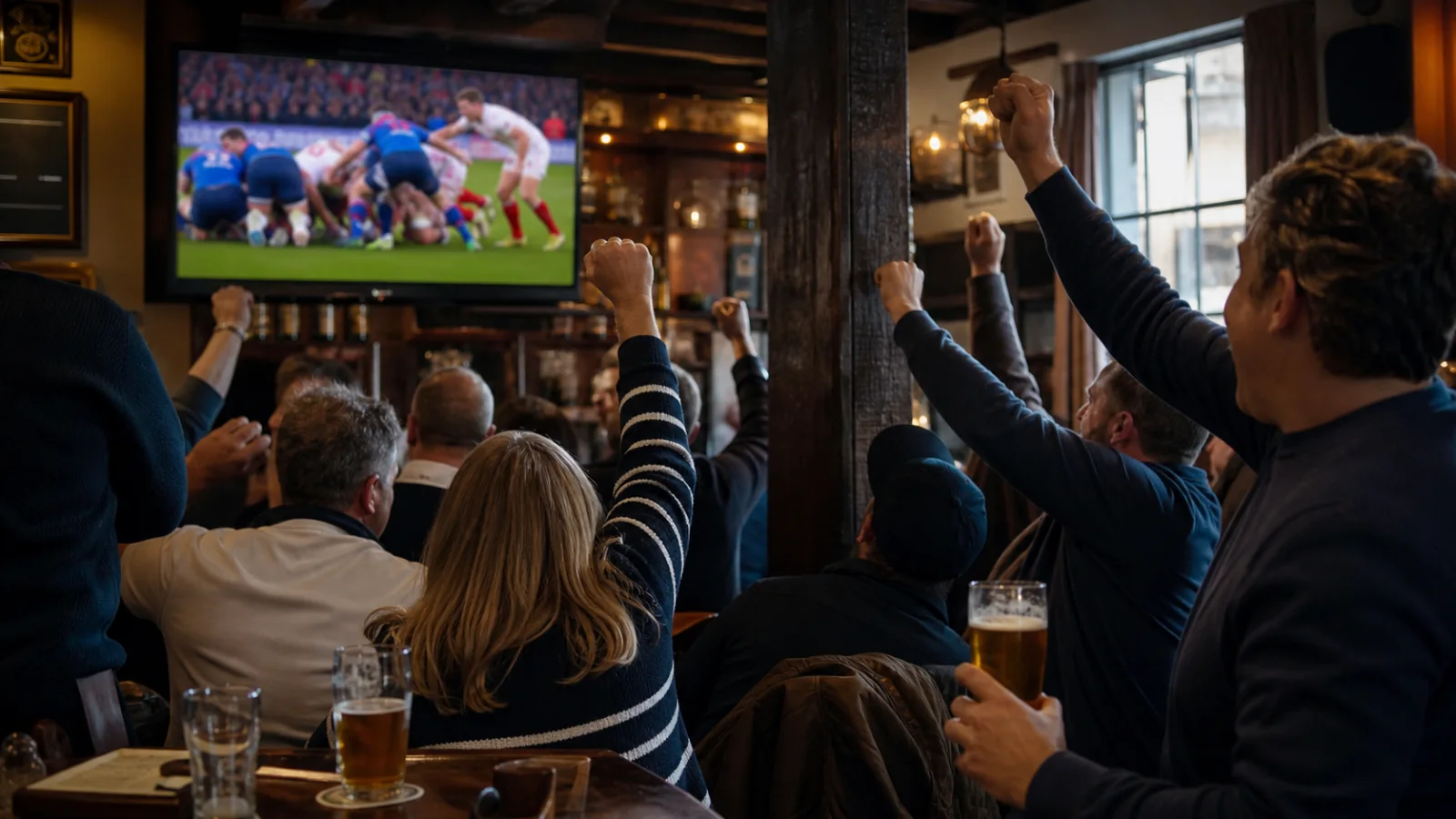
The Six Nations is one of the biggest sporting events of the early calendar year, and for pubs it represents something rare: a guaranteed reason for people to leave their sofas and watch together. Six weekends of fixtures, afternoon kick-offs, emotionally charged crowds, and a natural appetite for food and drink.
But here is what separates the pubs that profit from it and the pubs that just have a telly on in the corner: preparation. If you plan your screening, your deals, your promotion, and your follow-up properly, the Six Nations can do more than fill your pub for six Saturdays. It can introduce you to customers who come back all year.
Rugby isn't only a spring fixture, either. For the autumn internationals and the new Nations Championship in November, see our Autumn Rugby 2026 guide.
I have screened every major tournament at The Anchor in Stanwell Moor since we took on the Greene King tenancy in 2019. Some of those tournaments were brilliant for us, and some taught us expensive lessons. This guide is built on what actually works.
Getting your screening setup right
You do not need a stadium-level AV system. You need reliability, decent picture quality, and sound that works without deafening the people who did not come for the rugby.
Screens vs projectors
Screens are the safer choice for most pubs. A 65-inch commercial display is bright enough for a daylight room, does not need a dark environment, and is virtually maintenance-free. Mount it where the maximum number of seats can see it without neck strain. If your pub has multiple rooms, consider a second screen so people do not crowd into one area while the rest sits empty.
Projectors give you a bigger picture but need a darker room and a proper screen or flat white wall. They work well for evening fixtures and dedicated viewing areas. Budget for a replacement bulb annually if you screen regularly.
The critical thing is audio. One screen with clear sound beats three screens on mute. Invest in a decent soundbar or connect to your existing speaker system. Customers will tolerate an average picture but they will not tolerate inaudible commentary during a tight match.
Commercial subscriptions
Six Nations matches typically air on BBC and ITV, which are free to air. You still need a business TV licence (around 170 per year), but you do not need Sky or TNT Sports for the core fixtures. However, if you want to screen the Autumn Internationals, Premiership Rugby, or Champions Cup alongside the Six Nations, you will need a commercial Sky Sports subscription. Check your existing agreements before the tournament starts.
Do not use a domestic Sky subscription in a commercial premises. It violates the terms of service, the picture quality is audited by rights holders, and the fines dwarf anything you would cut from your subscription bill.
Room layout for match days
Think about this before the first fixture, not during it.
- Designate a primary viewing area with the best screen angles. Arrange seating so groups can see without standing.
- Keep a non-sport zone for customers who came for a quiet drink. Not everyone wants to watch rugby and alienating your regulars is a poor trade-off.
- Clear tables of menus and clutter before kick-off. Match-day tables need space for drinks, food, and elbows.
- Consider standing room near the bar for the atmosphere seekers. Some customers prefer standing in a crowd over sitting at a table.
Food and drink deals that protect your GP
Match-day promotions should increase average spend, not decrease your margin. The mistake most pubs make is discounting pints to attract bodies. That fills the room but empties the till.
Bundle, do not discount
Bundles are the answer. They feel generous to the customer while letting you control the margin.
- The Match Day Meal Deal: a main (burger, pie, or wings) plus a pint for a fixed price. Price it so your blended GP stays above 60 percent. If a pint costs you 1.80 and a burger costs 2.50, bundling them at 12.95 gives you strong margin and the customer feels they got a deal.
- The Group Bucket: four bottles or cans of a specific brand for a fixed price. Negotiate a promotional rate with your supplier or brewery. Buckets encourage groups to commit to your pub rather than splitting across venues.
- Half-Time Snack Board: a sharing platter of loaded nachos, wings, or chips. Quick to prepare, high margin, and it keeps people in their seats rather than leaving at half-time.
Drinks to push
Steer customers toward higher-margin serves. Premium lagers and craft ales have better GP than standard draught. If you have a decent cocktail or long-drink offer, match days are a good time to promote pitchers: high perceived value, high margin, and they keep groups ordering from one server rather than queuing individually at the bar.
Do not forget soft drinks and alcohol-free options. This is not a niche anymore. Groups will have designated drivers, and families may come for afternoon kick-offs. A decent alcohol-free beer range and proper soft drink options show you are thinking about everyone.
Setting up a booking system
For the biggest fixtures (England vs France, Wales vs Ireland, the final rounds when the championship is on the line), you need a booking system. Walk-ins are fine for pool matches, but a packed pub with no reserved seating leads to complaints, wasted prep, and regulars who cannot get a table.
Keep it simple
You do not need booking software for six weekends. A shared spreadsheet, a notebook behind the bar, or a simple Google Form works. What matters is:
- Take a name and phone number for every booking.
- Confirm the fixture and kick-off time so there is no confusion.
- Set expectations: minimum spend per person, arrival time, and how long the table is held.
- Send a reminder 24 hours before the match. A quick text or WhatsApp message cuts no-shows significantly.
If you serve food on match days, take food pre-orders with the booking. This speeds up your kitchen, reduces waste, and commits the customer to spending more before they arrive.
Managing capacity
Be honest about how many people your space can hold comfortably for a match day. Overselling creates a bad experience and leads to complaints. If you sell out, you sell out. That is a good problem. It creates demand for the next fixture and gives you a reason to promote early booking for the following week.
Social media promotion
Start promoting at least two to three weeks before the first fixture. Here is a simple timeline.
Three weeks out
Post the full fixture list with kick-off times. Use a clean graphic, not a wall of text. Tag it with your pub name and location. This is the awareness post that gets shared by local rugby fans.
Two weeks out
Announce your match-day deals. Show photos of the food, the screen setup, and the atmosphere from previous events. If this is your first tournament, take photos of the screen in action during a regular match and use those.
One week out
Open bookings. Create urgency: "Tables going fast for England vs Wales this Saturday." Direct people to your booking method (DM, phone number, or form).
Match day
Post a short video of the atmosphere during the match. This is content for the next fixture. People who see a packed, buzzing pub on social media want to be part of it next time.
Day after
Post the final score, a crowd photo, and a teaser for the next fixture. Thank everyone who came. Tag your pub and use location-specific hashtags. Keeping this kind of rhythm going is part of how we grew our Google Search visibility by 828%.
Converting match-day visitors into regulars
This is the part most pubs skip, and it is the most valuable part of the entire exercise. A busy Six Nations Saturday means nothing if those visitors never come back.
Capture contact details
Have a simple sign-up mechanism on every table. A QR code that links to a Google Form works well. Offer an incentive: 10 percent off their next midweek visit, entry into a prize draw for a free meal, or early access to booking for the next fixture. You are building a database of local people who like pubs and sport. That database is gold.
At The Anchor we have built a sizeable customer database using exactly this approach across events throughout the year. Every one of those contacts is someone we can reach directly without relying on social media algorithms.
Follow up within 48 hours
Send a thank-you message after the match. Include your next event: the quiz night, live music, or the following weekend's fixture. Speed matters. If you wait a week, they have forgotten you.
Create a reason to return
The Six Nations gives you six weekends. Between fixtures, you have midweek evenings to fill. Invite match-day visitors to your quiz night or a themed food evening. Cross-promote your regular events during the match-day experience with table cards or a quick announcement at half-time.
For a broader approach to running events that bring people back, our guide on how to run successful pub events covers the full planning cycle.
Planning beyond the Six Nations
The Six Nations is a template. Everything you learn screening these six weekends applies to the Autumn Internationals, the Champions Cup, the FIFA World Cup, the Euros, Wimbledon, and any other major sporting event.
Build a seasonal events calendar that maps out every major sporting fixture for the year. Plan your promotions, stock levels, and staffing around those dates. The pubs that treat live sport as a strategic pillar rather than an afterthought are the ones that fill consistently.
Kit and infrastructure
If the Six Nations proves that live sport works for your venue, invest properly before the next tournament:
- Upgrade to a commercial-grade screen with anti-glare coating if your current TV struggles in daylight.
- Install dedicated sport audio zones so you can have sound in the viewing area without overwhelming the rest of the pub.
- Build a relationship with your drinks suppliers around sporting events. Negotiate promotional pricing for tournament periods in exchange for visibility: branded glasses, point-of-sale materials, or social media mentions.
Common mistakes to avoid
Ignoring non-rugby customers. Not everyone in your pub on a Saturday afternoon wants to watch rugby. Keep a section of the pub available for regular trade or you will lose regulars who feel pushed out.
Discounting instead of bundling. Cheap pints attract the wrong crowd and destroy your margin. Bundle food and drink for perceived value while protecting your GP.
No booking system for big fixtures. Chaos at the door, overcrowding, and frustrated customers who arrived early but cannot get a seat. Plan capacity and take bookings.
Failing to capture details. Six busy Saturdays mean nothing if you have no way to contact those people afterwards. The sign-up sheet or QR code is non-negotiable.
Poor sound quality. A silent screen during a tense final five minutes is worse than no screen at all. Test your audio before the first fixture and have a backup plan.
The bottom line
The Six Nations is six weekends of guaranteed demand. People want to watch rugby together, they want to eat and drink while they do it, and they want atmosphere. Your job as a licensee is to deliver that experience reliably, capture the opportunity commercially, and turn one-off visitors into people who come back in March, April, and beyond.
Get the basics right (screen, sound, deals, bookings, promotion) and the Six Nations pays for itself many times over. Skip the preparation and you are just a pub with a telly on.
If you want help building a match-day strategy or a broader events calendar that keeps your pub full beyond tournament season, talk to Orange Jelly. We have been running events at The Anchor since 2019 and we know what works.
questions people ask.
Do I need a special licence to show Six Nations rugby in my pub?
How much does it cost to set up screening for live sport in a pub?
How do I convert match-day visitors into regulars?
What food and drink deals work best for match-day pubs?
keep reading.
- EventsAutumn Pub Event Ideas: The Playbook for Sept–NovThe autumn pub event ideas that actually fill tables: cask, low and no, wine, Halloween, rugby and gifting. The September-to-November moments and how to run them.5 min read
- EventsAutumn Internationals 2026: Fill Your Pub for the RugbyYour operator's guide to filling the pub for the autumn internationals in November 2026. Where to watch rugby, table bookings, match platters and a screen checklist.9 min read
- EventsBlack Friday Ideas for Pubs: Turn It Into BookingsBlack Friday ideas for pubs that build your December instead of cutting prices: turn the weekend into party deposits, pre-orders, gift-card sales and a January bounce-back. A plan to bank bookings and revenue, with no discount war.10 min read
not sure this is your actual problem?
That's the more common situation, and it's what the first conversation is for. An hour, free, going through what's happening in your business before anybody suggests a fix.