
Seasonal Pub Events Calendar: Year-Round Ideas That Drive Revenue
Never face a quiet period again. Discover month-by-month seasonal event ideas that tap into holidays, trends, and local culture to keep your pub buzzing
19 June 2025 · 9 min read · Peter Pitcher
Quick answer
Build a 12-month skeleton first: fixed dates like Burns Night and Halloween, movable ones like Mothering Sunday and Easter, then your own local dates. Choose one or two events a month rather than filling every night, work a quarter ahead, and take a deposit on anything with a fixed menu.
The calendar only feels quiet if you treat it that way. Every pub in the country gets the same 52 weeks. The difference between a steady year and a patchy one is usually planning done in February, not panic done in November.
I run The Anchor in Stanwell Moor as a Greene King tenant, and the change that mattered most was giving up on inventing events week by week. Instead we work a quarter ahead against a fixed skeleton: fewer events, better delivered, promoted earlier.
Here is that plan, with the lead times, the paperwork and the arithmetic built in.
Build the skeleton before you pick ideas
Open a blank 12-month calendar and mark three kinds of date before you brainstorm a single idea.
Fixed dates. Burns Night on 25 January, Valentine's Day on 14 February, St Patrick's Day on 17 March, St George's Day on 23 April, Halloween on 31 October, Bonfire Night on 5 November. These never move, so put them in for the next two years in one sitting and forget about them.
Movable dates. These are the ones that catch people out. Mothering Sunday in the UK is the fourth Sunday of Lent, so it can land anywhere from early March to early April, and Easter moves with it. Father's Day is the third Sunday in June. Bank holidays sit on the first and last Monday in May and the last Monday in August in England and Wales. Six Nations rugby runs across February and into March. Look up the real dates each autumn for the year ahead instead of assuming.
Your dates. The pub's own anniversary, the village fete, the school holidays for your catchment, the local carnival, the fixture list of the nearest football or rugby club. These usually earn more than any national day, because nobody else on your high street is building around them.
Only then start choosing events. The skeleton shows you where the gaps are, and the gaps are where the money is.
Q1: January to March (reset and recovery)
January is not dead, it is different. People still come out, they just spend differently and book earlier in the evening.
Take Dry January seriously rather than resenting it. Put three low and no serves on the menu that your team can make in under a minute, price them close to a full-strength equivalent, and put them on the table talker. A properly made alcohol-free serve holds a good margin and keeps the round intact, which is the point. There is more on getting the range right in our guide to low and no alcohol done properly.
Burns Night is the easiest fixed-menu night of the year: one sitting, one price, pre-ordered. As an example, 40 covers on a £24 fixed menu is £960 through the till, which is £800 once the VAT comes out, and at a 68% gross profit worked on that net figure you are left with roughly £544 before a drop of drink is poured. Always run gross profit on the net price rather than the menu price, or every event you plan will look better on paper than it does in the bank. You know your covers in advance, so you order to the number and reduce waste to almost nothing.
Valentine's works best as two sittings, say 6pm and 8.30pm, at a fixed price with a deposit taken at booking. Six Nations needs the fixture list on the wall by early January, food that survives a match crowd, and tables held on deposit rather than goodwill.
Q2: April to June (momentum and outdoor energy)
This quarter is about restarting outdoor trade and catching the two biggest family dates of the spring.
Mothering Sunday is a covers day, not an events day. Run sittings, take pre-orders on the main course, cap the number and stop taking bookings when the kitchen is full. Turning people away politely at 11am is better than a two-hour wait at 1pm.
Easter belongs to families. Run an egg hunt at a fixed time, 11am and 2pm rather than "all day", so the kitchen gets two predictable waves instead of five hours of drip.
Treat the garden opening as an actual event with a date on it. Pick a Saturday in late April, clean and repair the furniture the week before, add lights, and launch one new drink that only exists outside. A garden that "opens when the weather is nice" never gets promoted, so it never gets busy.
On bank holiday weekends, protect the Sunday evening. Everyone else plans the Monday. The Sunday of a long weekend is the unusual night when people can stay out, and it is rarely competitive.
Q3: July to September (peak summer)
Summer rewards repeatable formats over one-off spectaculars. Pick one thing your team can deliver every week without heroics: a Thursday BBQ, a Friday garden session, a Sunday afternoon with a single acoustic act.
August is a daytime opportunity. School holidays shift trade from evenings into lunch, so put your effort into a family-friendly lunch offer and a shaded corner rather than another late night.
September is the month most pubs get wrong. Trade drops, the garden fades, and Christmas feels too far away to promote. Fill it with cask: National Cask Ale Week falls in late September and gives you a ready-made reason to run a tasting flight, a meet-the-brewer evening or a cask of something local. The Macmillan Coffee Morning, traditionally the last Friday in September though Macmillan now encourages hosting across a wider window, is a strong daytime hook that costs you almost nothing and brings in people who never normally cross the threshold.
Q4: October to December (build to Christmas)
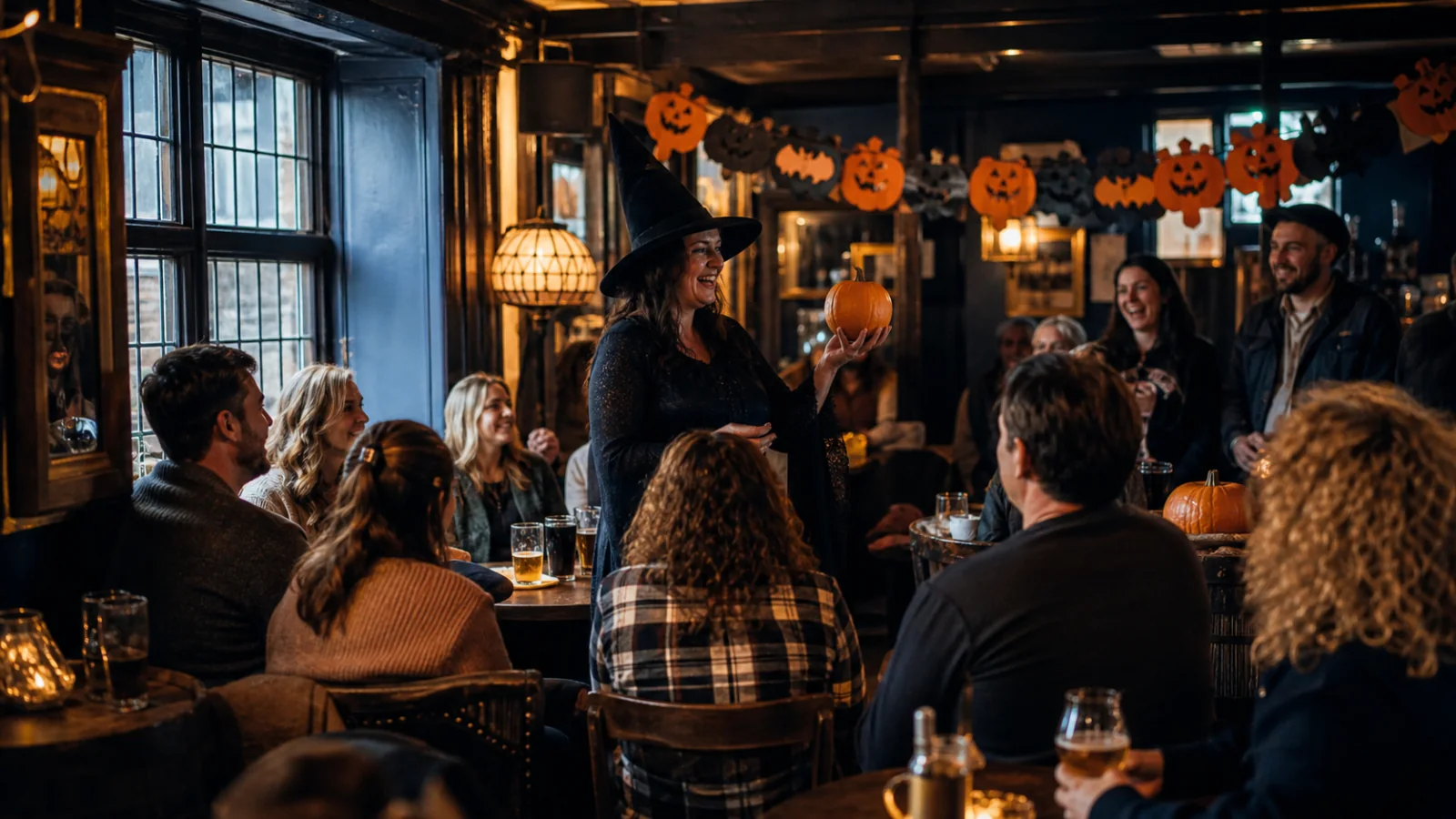
Halloween is a decoration night and a family night: an afternoon for children in costume, an evening for adults with a competition and a themed serve. Bonfire Night rarely needs your own fireworks. Being the warm place people go before and after the town display is a better and cheaper position.
For the full September-to-November plan (cask, low/no, wine, Halloween, rugby and gifting), see our autumn pub event ideas guide.
December pays for the quarter, and it is won in September. Open party bookings and deposits before the end of September, publish a fixed party menu with a pre-order deadline, and sell daytime slots hard: retired groups, office lunches, mother and toddler groups and clubs will take midweek lunchtimes that would otherwise sit empty. Our guide on filling December with Christmas bookings has the booking sequence in detail.
Cap capacity honestly. A December night that overpromises and underdelivers costs you the following January.
Lead times: what to lock in and when
Most event failures are lead-time failures. The idea was fine; there just was not enough runway to sell it.
| Event type | Start planning | Open bookings | Start promoting |
|---|---|---|---|
| Christmas parties | June | Early September | September onwards |
| Fixed-menu food night | 8 weeks out | 6 weeks out | 4 weeks out |
| Live music or paid act | 10 to 12 weeks out | 8 weeks out | 4 to 6 weeks out |
| Big sporting fixture | When fixtures publish | 3 weeks out | 10 days out |
| Weekly recurring night | 4 weeks out | Ongoing | Every week |
The paperwork that catches people out
Check three things before you promote anything unusual.
Your premises licence. Read the actual conditions, not your memory of them. Licensed hours, permitted activities and any outdoor area limits are all on there, and promising a marquee bar or a 1am finish you are not licensed for is an expensive mistake.
Temporary Event Notices. A TEN covers licensable activity beyond your permission, such as serving in a field or extending hours for one night. A premises can have up to 15 TENs in a calendar year covering no more than 21 days in total, with at least 24 hours between separate events. A standard notice needs at least ten working days' notice to the council and police, and a late TEN needs five. If you are a personal licence holder you can give up to 50 notices a year; if you are not, the limit is five.
Music. Live acts, a DJ, background playlists and karaoke almost always need a music licence covering both PRS and PPL. Our guide to PRS and PPL music licensing for pubs explains what you actually need and when.
How to choose the right events
Use four filters, in this order:
- Audience fit. Will this bring back the people you want more often, or just a crowd that visits once?
- Capacity fit. Can your team deliver it on a normal rota, in your actual kitchen?
- Repeatability. Could you run it again next year with the notes you kept this year?
- Margin. Work out the covers you need at your average spend before you commit to a fee. If an act costs £250 and your gross profit per head is £9, you need roughly 28 extra guests just to cover the booking. That is a fair target for a quiz, and an unfair one for a wet Tuesday in February.
If an idea fails one of the first three filters, skip it. If it fails the fourth, change the price or the format, not the date.
Turn the calendar into bookings
An event without a booking system is a hope. Put a booking link on every post, take a deposit for anything with a fixed menu or a limited capacity, and send a reminder two days before with a one-tap way to cancel.
At The Anchor, our own pub, we cut booking no-shows by 89%, and deposits plus a clear reminder did most of the work. An empty table you were counting on hurts more than a table you never sold, because you ordered stock and rostered staff for it.
The mechanics of running the night itself, from run sheet to team briefing, are covered in our guide to running successful pub events.
Common mistakes
- Too many events. Four mediocre nights beat nothing, but two excellent ones beat all four. Cut the list before you cut the effort.
- Launching without a booking path. If the post does not say how to book, it is a poster, not a promotion.
- Ignoring daytime. Lunches, coffee mornings and afternoon groups fill hours you are already paying for.
- No debrief. Write down covers, spend per head, what ran out and what dragged, on the night. Next year's version takes an hour to plan instead of a week.
Quick checklist
- Skeleton calendar built with fixed, movable and local dates.
- One or two events chosen per month, no more.
- Booking links live and deposits switched on.
- Licence, TEN and music permissions checked before promoting.
- Calendar published on socials, on the website and printed in the pub.
Mini FAQ
What if an event flops? Run it twice before you judge it. First outings are always thin, because most people need to see something on the calendar more than once before they commit.
questions people ask.
How far ahead should I plan my pub events calendar?
What are the best months for pub events in the UK?
How many events per month should a pub run?
Do I need a Temporary Event Notice for a pub event?
How do I stop seasonal event bookings turning into no-shows?
keep reading.
- EventsAutumn Pub Event Ideas: The Playbook for Sept–NovThe autumn pub event ideas that actually fill tables: cask, low and no, wine, Halloween, rugby and gifting. The September-to-November moments and how to run them.5 min read
- EventsAutumn Internationals 2026: Fill Your Pub for the RugbyYour operator's guide to filling the pub for the autumn internationals in November 2026. Where to watch rugby, table bookings, match platters and a screen checklist.9 min read
- EventsBlack Friday Ideas for Pubs: Turn It Into BookingsBlack Friday ideas for pubs that build your December instead of cutting prices: turn the weekend into party deposits, pre-orders, gift-card sales and a January bounce-back. A plan to bank bookings and revenue, with no discount war.10 min read
not sure this is your actual problem?
That's the more common situation, and it's what the first conversation is for. An hour, free, going through what's happening in your business before anybody suggests a fix.