
Low-Cost Decor Refreshes that Signal 'New and Improved'
Give guests visible proof of change with affordable decor moves that scream fresh energy without touching structural work.
30 January 2025 · 7 min read · Peter Pitcher
Quick answer
Refresh what guests see first rather than the corners they never look at. Repaint the entrance, bar front or a feature wall, standardise your signage and menu boards, re-stain and steam clean seating rather than replacing it, layer warm lighting on a dimmer, add a few large plants, and build one memorable visual talking point.
Most guests decide how they feel about a room before they reach the bar. They are not appraising your furniture. They are reading signals: is this place cared for, is anything happening here, do I want to sit down.
Good news is that those signals are cheap to change. Bad news is that most licensees spend the money on things guests never register, then wonder why nobody noticed.
Here is the order I would do it in, running The Anchor in Stanwell Moor on a tight budget, in a building I lease from Greene King rather than own.
Walk in like a stranger first
Do this before you spend anything. Park where a first-time customer would park, walk the route they walk, and photograph every step on your phone: the car park, the sign, the door, the first three metres inside, the bar, the seating, the loos.
Then look at the photos on a big screen the next morning. Photographs are brutally honest in a way that standing in your own pub never is. You will see the dead pot plant, the four different fonts, the pile of empty crates by the door and the poster for an event that happened in March.
Write down the five worst things. That list, not a mood board, is your refresh plan.
1. Repaint the high-visibility zones
A fresh coat on the entrance, bar front or feature wall changes the first impression immediately. Focus on the areas guests see first, not the corners they never look at.
Work in this order: door and door frame, bar front, then the wall people face when they sit down. Use trade eggshell or a scrubbable matt on woodwork and high-traffic walls, because kitchen-grade paint survives shoulders, chair backs and cleaning. Matt emulsion in a corridor is a false economy.
On colour, keep it simple. One deep, dark tone on a feature wall or the bar front, with everything else quiet, will always look more deliberate than three mid-tones fighting each other. Test a metre-square patch and live with it for two evenings under your actual lighting before you commit. Colours behave completely differently under warm bulbs at nine on a Friday than they do on a bright Tuesday morning.
Two things to check before you open the tin: if the building is listed, internal decoration to a fixture or panelling may need listed building consent, and if you are tied, painting over a heritage or brand scheme may sit in your agreement. A quick email to your BDM costs nothing.
2. Upgrade signage and menus
Old signage whispers neglect. Clean typography, chalkboards that earn their space, and a tidy menu signal care. It is a small cost with a big perception lift.
The practical fix is standardisation. Pick one font, one board style and one voice, then apply it to everything: the A-board, the specials board, the toilet signs, the "please wait to be seated" card and the laminated thing taped to the fruit machine. Most pubs have eight visual identities running at once and it reads as chaos.
While you are at it, remove every out-of-date poster. Nothing kills the "new and improved" message faster than an event flyer from last season still blu-tacked to the door.
If you are changing anything on the outside of the building, remember signs are controlled separately from planning permission under the Town and Country Planning (Control of Advertisements) (England) Regulations 2007. Standard signage is often covered by deemed consent, but illuminated signs, large signs and anything on a listed building or in a conservation area frequently need express consent from the council. Ring the planning duty desk before you order.
3. Refresh seating without replacing
Replacing furniture is the single most expensive way to change a room, and often the least noticed.
| Refresh | Replace |
|---|---|
| Re-stain and re-wax wooden chairs | Buy new chairs in the same shape |
| Steam clean upholstery and carpets | Rip out and re-carpet |
| Recover seat pads in one consistent fabric | Order a new banquette |
| Tighten every wobbly joint and level every table | Live with rocking tables |
Start with the wobble. Go round with a screwdriver, a bag of felt pads and a level, and fix every rocking table and loose chair joint. It takes a morning and it removes the single most common irritation guests never mention but always feel.
Then re-stain the timber and steam clean the fabric. When you do recover pads, use a contract fabric that meets BS 7176 for medium hazard premises with Crib 5 ignition testing, and BS 5867 for any curtains. Domestic soft furnishing fabric does not qualify and the fire safety duty sits with you. Get the certificate in writing.
One consistent fabric across all your pads will make mismatched old furniture read as a collection rather than a jumble.
4. Layer lighting
Lighting is the fastest way to reboot the atmosphere on a budget. Add warm bulbs, dimmers, or simple table lamps to remove the harsh overhead feel.
Get specific about it. Aim for 2700K warm white lamps rather than the 4000K plus cool white that most trade fittings ship with, because cool light makes food look grey and faces look tired. Then build three layers: general ambient light overhead on a dimmer, task light where people read menus and pay, and accent light on the things you want noticed, such as the gantry, a fireplace or a feature wall.
Two easy wins most pubs miss. Clean the fittings and shades themselves, because dust genuinely eats output. And put your evening lighting on a set level, agreed with the team, so the room does not depend on whoever opened up that day.
Anything involving new circuits is a job for a qualified electrician working to BS 7671. Lamp swaps and plug-in table lamps are not.
5. Bring the outside in
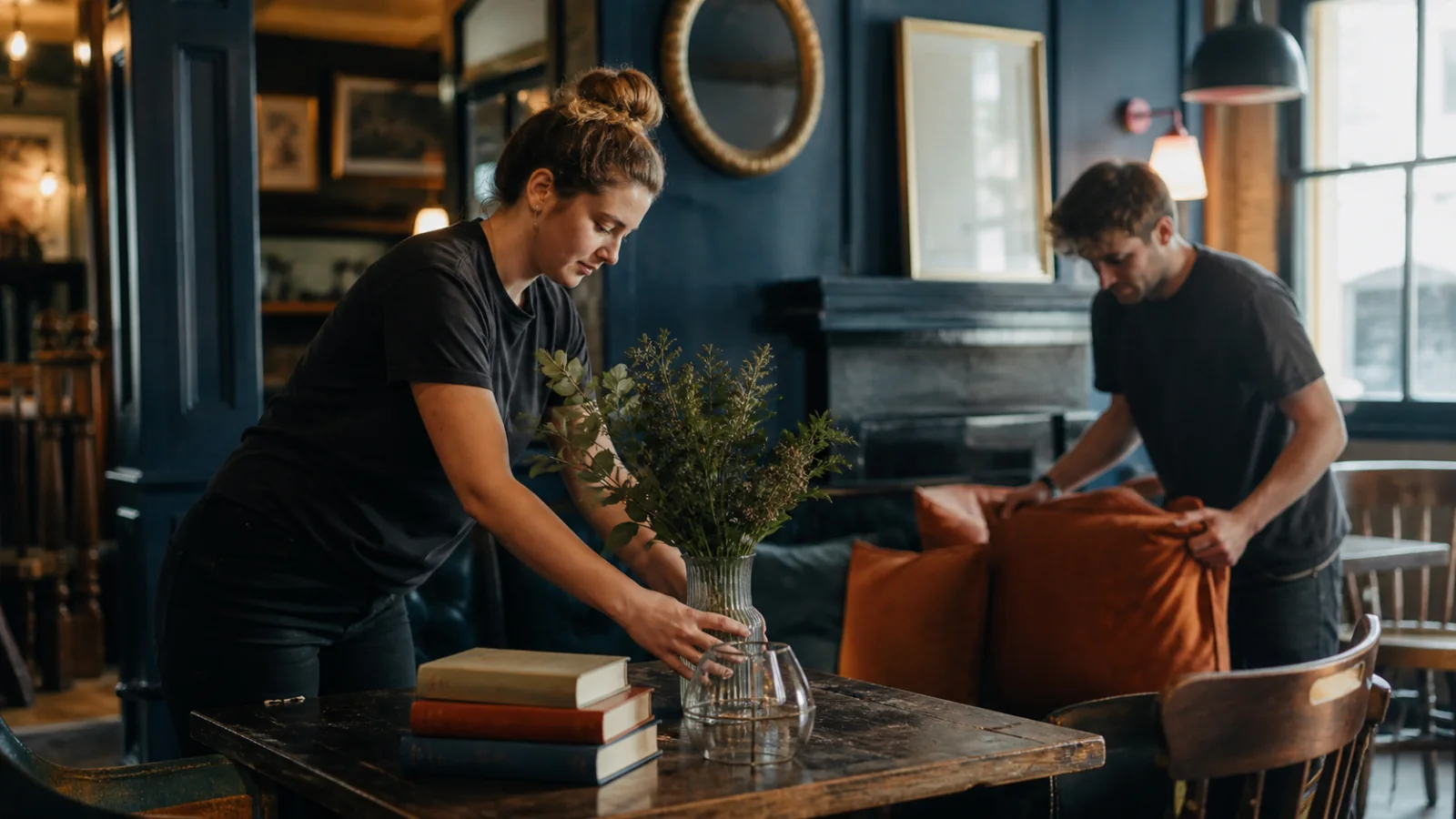
Simple greenery, fresh flowers, or a few tall plants soften the space and feel intentional. They also photograph well.
Buy fewer, bigger plants. Three large specimens in decent pots read as design; twelve small supermarket pots read as clutter and die by March. Pick species that survive low light and inconsistent watering, put one person in charge of them, and put watering on the weekly cleaning rota so it actually happens.
Outside, a hanging basket by the door and a swept, weed-free entrance do more for kerb appeal than any amount of interior work, because they are what people see from the road.
6. Curate talking points
Give guests one or two visual moments to remember. A wall of local history photographs, a chalkboard story, or a signature drinks display makes the space feel like yours and nobody else's.
The best talking points are local and true. Old photographs of the street borrowed from the parish archive or a local history group. A framed pump clip wall of every guest ale you have run. A blackboard where regulars name the next quiz team. These cost almost nothing and they cannot be copied by the chain pub down the road.
Pick the spot with the best light and the cleanest background, because that corner will end up in customer photos. That makes it free marketing, and it is worth reading how to make the most of it in our guide to Instagram marketing for pubs.
If the pub needs more than cosmetics, the phased approach in our under £5K pub refurbishment guide sets out what to tackle in what order.
Common mistakes
- Trying to refresh everything at once, so nothing looks finished.
- Choosing colours that are trendy but wrong for your pub and your light.
- Buying furniture before checking the fire certification.
- Forgetting the entrance and the toilets, where a small budget goes a long way.
- Doing the work quietly and never telling anyone it happened.
Quick checklist
- Walked the arrival route and photographed every step.
- One high-visibility repaint done, tested under evening light.
- Menu, boards and signage standardised to one font and one voice.
- Every wobbly table and chair fixed.
- Seating refreshed with certified contract fabric, not replaced.
- Lighting layered, warm and dimmable, fittings cleaned.
- One memorable visual moment added in the best-lit corner.
- Before and after posted, and the team briefed to mention it.
Mini FAQ
Should I close to do this? No. Almost all of it can be done before opening or on a quiet weekday morning, one zone at a time.
questions people ask.
How much does it cost to refresh a pub interior?
What pub decor changes have the biggest impact?
How often should a pub refresh its look?
Do pub cushions and seat pads need fire-rated fabric?
How do I make sure customers notice the changes I've made?
keep reading.
- OperationsAI for Pubs: What Is New, What Works and Where to StartAI for pubs, from a working licensee: what has changed, the jobs it does well, the shortcuts worth knowing and the house rules that keep you out of trouble.24 min read
- OperationsWet-Led vs Food-Led Pubs: Understanding Your Revenue ModelWhat wet-led and food-led actually mean, the economics of each model, and how to work out which approach is right for your pub.15 min read
- OperationsFood Allergies and GDPR: The Compliance Nightmares That Could Close You DownNavigate the compliance minefield without hiring expensive consultants. Simple systems that keep you legal and let you focus on running your pub.10 min read
not sure this is your actual problem?
That's the more common situation, and it's what the first conversation is for. An hour, free, going through what's happening in your business before anybody suggests a fix.