
Should You Refurb Your Pub? What to Fix First for Under £5K
Before you rip anything out, read this. The changes that actually bring customers back cost under £5K, and most licensees start in the wrong place.
17 April 2025 · 10 min read · Peter Pitcher
Quick answer
Work out whether the problem is the building or the offer, then spend in phases. Under £1,000 buys a deep clean, warm lighting on dimmers, one repainted wall and sorted toilets. The next band recovers seating and takes the ring out of a hard room. Above that, do the entrance, the sign, and one corner worth photographing.
Most licensees who ask me about a refurb do not need one. They need about £3,000 spent in four right places, and a fortnight of their own graft.
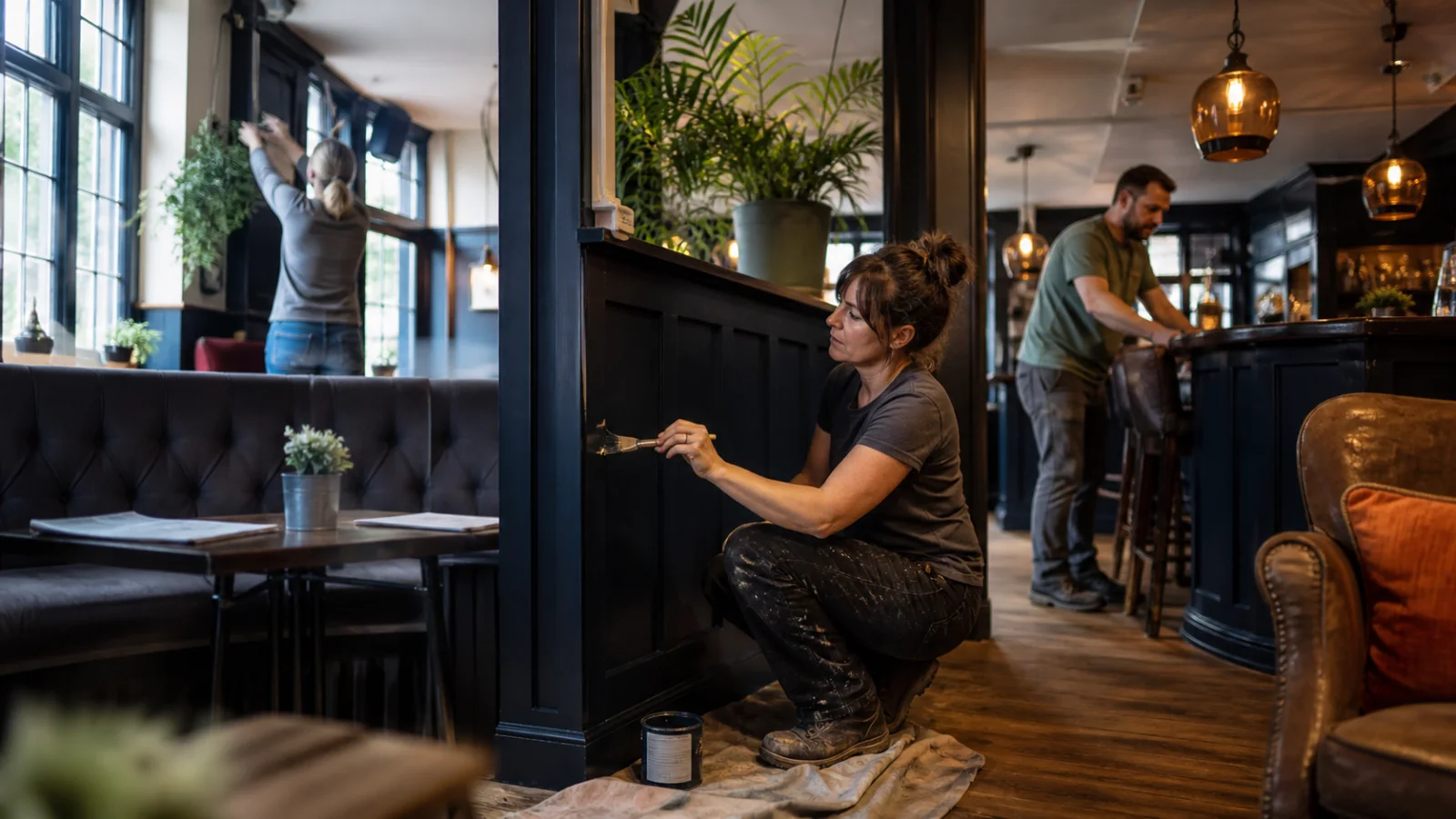
A proper refit is a six-figure conversation involving a landlord, an architect and a closed door. That is not what this guide is about. This is about what you can change in the next six weeks, while still trading, for under five grand.
I run The Anchor in Stanwell Moor as a Greene King tenant, so everything here comes from a tight budget and a building I do not own.
First, work out whether it is the building or the offer
A refurb fixes a room that looks tired. It does not fix a menu nobody wants, a Tuesday with nothing on, or a pub that cannot be found online. Spend the money in the wrong place and you get a smarter room with the same empty tables in it.
Do this on your next quiet morning:
- Stand on the pavement outside for two minutes and look at your own front door as a stranger would. Would you walk in?
- Read your last twenty online reviews and tally the complaints. Count how many mention the decor, and how many mention food, waiting, noise or the welcome.
- Ask three regulars what they would change if the pub were theirs. They will tell you honestly, and they are right more often than you expect.
The biggest lift we had at The Anchor was +403% table bookings, and that came from the offer and how we marketed it, not from new furniture. If your review tally points at the food or the service, fix that first and put the paint money behind it.
Set a budget you can defend
Pick the number by working backwards from the trade it has to earn.
Take the VAT out first. Gross profit is worked on the net price, not the menu price, and this is the single most common way a refurb budget gets talked into being affordable.
Say you spend £4,000. Most pubs target food gross profit somewhere around 65% to 70%. A £16 roast is £13.33 once the VAT comes off, so at 68% you keep about £9.07. Divide £4,000 by £9.07 and you need roughly 440 extra roasts across a year, which is about nine a week. That is a target you can picture. "Four grand on a refurb" is not.
Run the same sum on wet trade if you are drinks led. Wet GP typically runs in the 55% to 65% range. A £5 pint is £4.17 net, so at 60% you keep £2.50, and earning £4,000 back means about 31 extra pints a week. Both examples are illustrative, so use your own prices and your own GP, worked on the net figure.
One more thing worth a phone call to your accountant: straightforward redecoration is normally treated as a revenue expense and comes off your profit in the year you spend it, whereas work that improves or alters the asset is capital. HMRC's Business Income Manual sets out the distinction at BIM46900 onwards, and how you scope the job can change the tax treatment.
Phase 1: Quick wins (under £1,000)
This is the phase that changes how the room feels, and almost none of it is skilled work.
Deep clean everything guests touch or look up at. Hire a rotary floor machine for a day and do the trade floor properly. Degrease the bar top and gantry. Then clean the light fittings: a dusty shade swallows a startling amount of light, and most have not had a ladder near them in years.
Warm the lighting. Cool white lamps at 4000K and above make skin look grey and food look worse. Swap to 2700K warm white, fit dimmers on the main circuits, and add two or three table lamps for the evening. This is the cheapest atmosphere change there is, and it is the whole idea behind rebooting your pub atmosphere on a budget.
Paint one high-visibility wall. Trade eggshell or a scrubbable matt, one weekday morning, two coats.
Sort the toilets. Guests forgive a scuffed bar and never forgive a grim loo. A working lock, a clear mirror, a hook on the door and a light that does not buzz. Fuller breakdown in the pub toilet refurbishment budget guide.
Bin the chipped glassware. Nothing announces neglect faster, and it is a hygiene issue too.
Phase 2: Comfort upgrades (£1,000 to £2,500)
Comfort is what keeps people in the building for a second drink, so this is the phase that pays.
Recover, do not replace. A trade upholsterer charges per seat or per metre of bench, and recovering a banquette costs a fraction of a new one. Quote a contract upholsterer, not a domestic one, because the fabric matters legally as well as visually (see the rules below).
Fix the acoustics. A hard room pushes people out early. Clap once in your empty bar: if it rings, you have a problem. Rugs, heavy curtains, fabric-backed wall panels and a few upholstered pieces all pull the ring out of a room.
Give people a choice of seat. Most pubs have one seating type repeated forty times. A mix of a bench, loose chairs, a couple of high tables and one armchair by the fire covers solo drinkers, couples, groups of six and the bloke with a newspaper.
Stop the draught. A door curtain on the main entrance makes the tables nearest it usable in winter, and it takes load off the heating.
Phase 3: Statement moments (£2,500 to £5,000)
Build one photo-worthy corner. Not the whole pub. One spot people will stand in front of: a painted feature wall, a mirror, a flower arch in summer, a local history wall. This is your free marketing, and it is the same thinking behind low-cost decor refreshes that signal new and improved.
Light and tidy the back bar. Guests stare at the gantry the whole time they are served. Strip the dead stock, face everything forward, add an LED strip behind the bottles.
Do the entrance and the sign. Repaint the door frame, clean the fascia, fix the guttering that drips on the sign, and light the entrance properly.
Before you order external signage, check the consent position. Signs are controlled separately from planning permission under the Town and Country Planning (Control of Advertisements) (England) Regulations 2007. Plenty of standard signs are allowed under deemed consent, but illuminated signs, oversized signs, and anything on a listed building or within a conservation area often need express consent from the council. Listed building consent is a separate application again. A five-minute call to the planning duty desk beats a removal notice.
If the pub needs more than a cosmetic refresh, and trade has dropped to the point where you need a proper recovery plan, our find out why revenue is falling service will help you decide what to tackle first.
Ask your pubco or brewery before you spend your own money
If you are tied, go to your BDM with a one-page plan before you spend a penny of your own. Show the work, the cost, and the trade you expect it to produce. Ask three questions: is there a capital investment budget, is any of this actually the landlord's repairing obligation under the lease, and is there a rent concession available while the work is done.
Be careful what you sign in return. Under the Pubs Code etc. Regulations 2016, tied tenants of the large pub companies have market rent only rights triggered at certain events, and landlord and tenant can agree to defer those rights in exchange for significant investment, for up to seven years. That may still be a good deal, but it is a real trade. Get any offer in writing and take advice first. I am a BII member and this is precisely what their helpline is for. There is more in our guide to improving your brewery tie deal.
The rules you cannot decorate around
- Upholstery fire standards. Pubs are treated as medium hazard, which means contract upholstery to BS 7176 with Crib 5 ignition testing, and curtains to BS 5867. Domestic fabric from a soft furnishings shop will not do. Get the certification in writing and keep it with your fire risk assessment, because the Regulatory Reform (Fire Safety) Order 2005 puts the duty on you.
- Your fire risk assessment. Any layout change means reviewing it. Do not let new furniture narrow an escape route, and do not hang bunting over a fire notice.
- Electrics. Commercial installations must comply with BS 7671, and the Electricity at Work Regulations 1989 require you to keep them safe. A periodic electrical installation condition report, typically recommended every five years for hospitality premises, is how you show that.
- Your premises licence plan. If your licence has a plan attached and you materially move the servery, you may need to vary it. Check with the licensing authority first, not after.
- Accessibility. The Equality Act 2010 requires reasonable adjustments. Do not lose a level route, a grab rail or the accessible toilet to a new banquette.
Where to avoid spending
| Money that shows | Money that disappears |
|---|---|
| Warm lighting and dimmers | Designer light fittings nobody looks at |
| Clean, comfortable seating | Brand new furniture in the same layout |
| The entrance, the sign, the toilets | The area behind the bar that only staff see |
| One strong feature corner | A trendy colour scheme that dates in two years |
| Deep cleaning the floor you have | Replacing a carpet that could be cleaned |
Add to that list anything bought because a rep talked you into it on a Tuesday.
How to phase the work without closing
Split the room into zones and take one at a time. Do the messy work Monday to Wednesday morning, before service, on your quietest days. Paint fumes and a bank holiday do not mix.
Tell people it is happening. A dust sheet with a sign saying "new snug, ready Friday" reads as momentum. The same dust sheet with no sign reads as decline.
If you have a kitchen, seal it off and speak to your EHO if the work goes near food preparation areas. Take before photographs of every zone: you will want them for social media, for your pubco, and for your own morale in week three.
Common mistakes
- Spreading £5,000 evenly across the whole pub so nothing looks changed.
- Ignoring the entrance and the toilets, the two places guests judge you hardest.
- Changing style without a one-page brief, so the room ends up as three half-finished ideas.
- Doing it quietly and never telling anybody it happened.
- Buying furniture before checking the fire certification.
Your under £5K checklist
- One high-visibility wall repainted.
- Lighting warmed, dimmed and the fittings cleaned.
- Seating recovered rather than replaced, with certified contract fabric.
- Entrance, sign and toilets sorted.
- One feature corner worth photographing.
- Pubco asked, in writing, before you spent your own money.
Mini FAQ
What is the biggest perception win? Lighting and cleanliness. Guests register both within seconds of walking in, long before they notice what the furniture cost.
How do I stop a phased job dragging on for months? Put a date on each zone before you start anything, write those dates where the team can see them, and finish one zone completely before you open the next. A pub with three half-done corners looks worse than a pub that has been left alone.
questions people ask.
What's the single best low-cost improvement for a tired-looking pub?
Can I refurbish my pub while staying open?
Should I ask my brewery or pubco for refurbishment money?
How much should I budget for a small pub refurbishment?
Do I need planning permission to change my pub signage?
keep reading.
- TurnaroundHow to Fill Empty Pub Tables: 15 Strategies That Actually WorkPractical tactics to transform empty pub tables into bustling profit centres. 15 proven strategies tested at The Anchor to fill seats and boost revenue.9 min read
- TurnaroundCommunity Outreach Ideas That Reintroduce Your Pub to the NeighbourhoodReconnect with residents, schools, and clubs through purposeful outreach that turns goodwill into bookings.10 min read
- TurnaroundStart Planning Christmas Now: 19 Festive Ideas to Secure December Bookings EarlyChristmas planning starts in summer. Price two packages properly, open bookings in September, take deposits on every party, and fill December with these 19 ideas.8 min read
not sure this is your actual problem?
That's the more common situation, and it's what the first conversation is for. An hour, free, going through what's happening in your business before anybody suggests a fix.