
Music Bingo 101: Licensee Guide
Hybrid quiz/karaoke toolkit with playlists, Canva cards, and MC tips so you can run 90-minute music bingo nights without marking.
30 October 2025 · 6 min read · Peter Pitcher
Quick answer
Guests mark off song titles instead of numbers, so staff do no marking. Build a 60 to 80 track playlist, print 40 to 60 unique 5x5 cards, and keep each clip to 15 to 25 seconds. Run three games over 90 minutes, and rotate the theme every fortnight.
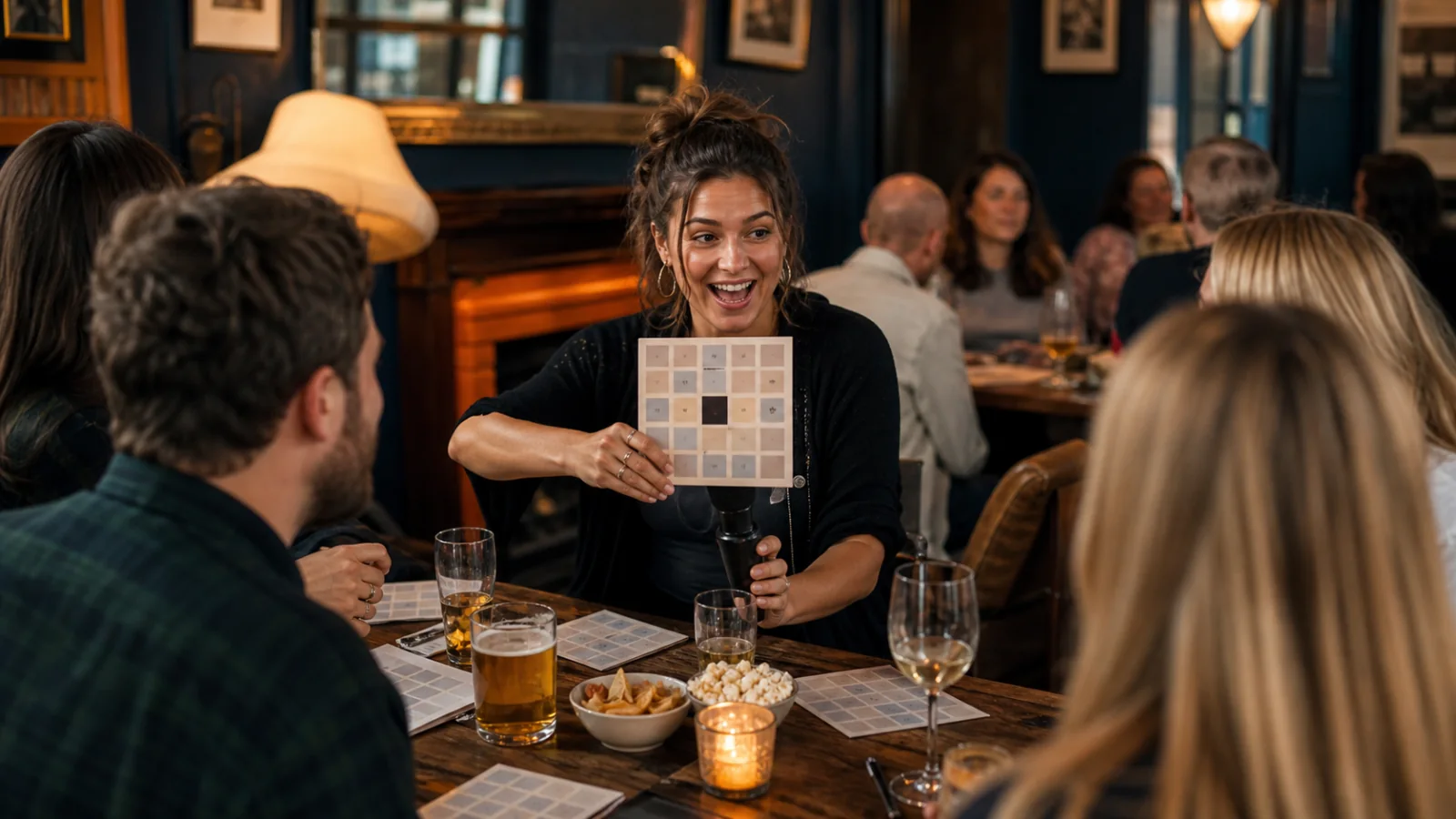
Swap numbers for nostalgia, and you’ve got the easiest crowd-pleaser in your events calendar. Music bingo lets guests mark off song titles instead of digits, meaning zero marking for staff, plenty of singalongs, and a format you can theme endlessly. This guide covers card creation, playlists, run-sheets, prizes, marketing, accessibility, and compliance so you can launch within a week.
Choose Your Theme and Audience Fit
Music bingo thrives when the soundtrack matches your crowd and timeslot.
- After-work Aperitivo (Thursdays): 80s synth, Britpop, indie disco.
- Family Sunday: Disney bangers, musical theatre, film soundtracks.
- Student night: TikTok viral hits, 00s R&B throwbacks.
- Seasonal specials: Festive classics, Eurovision history, Pride anthems.
Rotate the headline theme every fortnight but keep a consistent night/time so regulars know when to return.
Card Creation (Analogue and Digital)
Most venues keep it tactile with printed cards: simple 5×5 grids containing song titles or artists. Aim for 40–60 unique cards per theme so neighbouring tables don’t duplicate.
- Build a master tracklist of 60–80 songs in a spreadsheet.
- Randomise the order using
=RAND()and distribute evenly across grids. - Label each card (A01, A02…) so winners are easy to verify.
- Print on 160gsm paper for durability; laminate if you plan to reuse with dry-wipe pens.
Digital option: tools like MyFreeBingoCards or Bingo Baker allow QR-access cards. Great for hybrid events, but ensure Wi-Fi is stable and provide a few printed backups for guests who prefer paper.
Playlist and Cue Crafting
- Clip length: 15–25 seconds is plenty, long enough for recognition, short enough to keep momentum.
- Transitions: preload the playlist in Spotify/Apple Music/DJ software with 2-second crossfades to avoid dead air.
- Host cues: before each clip ask, “Markers ready?” and after each track state “That was Freed from Desire by Gala. Mark it if it’s on your card.” This helps guests who didn’t recognise the song by ear.
Theme rotation idea
| Week | Theme | Anchor tracks |
|---|---|---|
| 1 | 90s Dancefloor Fillers | Gala, Livin’ Joy, Faithless |
| 2 | British Icons | Oasis, Amy Winehouse, Stormzy |
| 3 | Movie Night | Guardians mix, Dirty Dancing, Barbie |
| 4 | Girl Bands vs Boy Bands | Little Mix, Westlife, Sugababes |
Rules and Rounds
A standard night runs three games of increasing stakes:
- Game 1: One line (horizontal/vertical). Small prize.
- Game 2: Two lines. Slightly larger prize.
- Game 3: Full house. Main prize.
When winners shout “BINGO!” the host pauses music, verifies card versus the master list, and restarts after a quick photo.
Tie-break suggestion: keep a spare “guess the intro” clip. First player to name artist and title wins.
Hosting and Energy
- Keep patter short and upbeat. Think “singalong MC” rather than stand-up comic.
- Encourage table choreography (claps, napkin waves). Offer a bonus drink token for the best dance move caught on stories.
- Use a winners board or Polaroid line so returning guests feel part of the club.
Run-of-Show (90 Minutes)
| Time | Action | Detail |
|---|---|---|
| 00:00–00:05 | Welcome & rules | Explain how to mark cards, demonstrate dabber use, highlight prizes. |
| 00:05–00:30 | Game 1 | 25 tracks; award single-line and double-line prizes. |
| 00:30–00:40 | Break | Push sharing plates, capture Reel, trail next theme. |
| 00:40–01:05 | Game 2 | Switch playlist to keep energy up; offer optional “dance-off” bonus. |
| 01:05–01:10 | Encore mini-game | First to guess three intros wins shot/AF mocktail tokens. |
| 01:10–01:15 | Game 3 finale & wrap | Full house prize, group photo, plug bookings. |
Kit and Setup
| Item | Why | Tip |
|---|---|---|
| Laptop/tablet | Playlist + master tracklist | Download playlists offline. |
| PA/speaker + mic | Keep energy high | Test speech vs music volume pre-doors. |
| Printed cards/dabbers | Core mechanic | Colour-code by game to avoid mix-ups. |
| Prize stash | Lines + full house | Include non-alcoholic options. |
| Float / card reader | Optional entry fee or bundles | Mark all sales through the till for reporting. |
Budget snapshot: £30–£60 printing, £50–£150 prizes, optional host fee £100–£250, plus staff hours.
Marketing Playbook
- Visual identity: retro gradients, big typography (“Sing. Mark. Win.”).
- Teasers: ask followers to guess three blurred song titles for a free entry.
- Copy-ready caption: “Music Bingo drops Thursday 7.30pm 🎶 Free to play, prizes every round, bookings recommended 👉 [link].”
- Day-of stories: show card stacks, dabbers lined up, playlist screenshot.
Cross-link to your quiz night launch guide for guests who also love trivia, and to everything you need to run a karaoke night for those chasing mic time.
Accessibility and Inclusion
- Offer large-print cards and pens with chunky grips.
- Provide a printed list of songs played after each round so deaf or hard-of-hearing guests can check their cards.
- Keep a few tables closer to the speakers for those who rely on audio cues, while offering low-volume corners for sensory-sensitive guests.
Compliance Corner
Music bingo uses recorded tracks, so ensure your venue holds TheMusicLicence (PPL PRS) covering public performance of recorded music, which our guide to PRS and PPL music licensing for pubs explains in full. If you charge for entry or offer cash-equivalent prizes, check local licensing guidance to confirm you’re running a promotional activity rather than regulated gambling. Useful starting points: PPL PRS and Gambling Commission guidance.
Metrics to Track
| KPI | Target | How to capture |
|---|---|---|
| Cards issued | High share of available seats | Count per game. |
| Bundle uptake | Strong | Use till buttons. |
| Social tags | Steady nightly posts | Re-share to encourage more. |
| Repeat attendance | Strong within a month | Quick QR survey or booking log. |
Ask the team the next morning: Which tracks landed? Did we run out of dabbers? Did the break feel long enough? Capture ideas for next week’s theme.
FAQs
How many unique cards and tracks do I really need? For a 60-person room plan 40–60 distinct cards and a 60–80 track playlist; reuse the template but reshuffle for each theme.
Do I need an extra licence beyond my existing music licence? Usually TheMusicLicence (PPL PRS) covers music bingo, but double-check your account includes recorded music for events and keep proof on file.
Can I run it with just one staff member? Ideally have a host/MC plus a floor runner to verify wins and push bundles; solo hosting works only in very small venues.
What’s the best way to monetise if entry is free? Promote pre-booked tables with sharer platters, sell “dabber + drink” bundles, and capture emails for future promotions.
How often should I rotate themes? Change the headline theme every 2–3 weeks so regulars feel variety without forcing you to rebuild assets weekly.
Need backup?
Tap the sticky “Get in Touch” button on orangejelly.co.uk or email peter@orangejelly.co.uk for playlist curation, MC coaching, or bespoke card builds.
keep reading.
- EventsAutumn Pub Event Ideas: The Playbook for Sept–NovThe autumn pub event ideas that actually fill tables: cask, low and no, wine, Halloween, rugby and gifting. The September-to-November moments and how to run them.5 min read
- EventsAutumn Internationals 2026: Fill Your Pub for the RugbyYour operator's guide to filling the pub for the autumn internationals in November 2026. Where to watch rugby, table bookings, match platters and a screen checklist.9 min read
- EventsBlack Friday Ideas for Pubs: Turn It Into BookingsBlack Friday ideas for pubs that build your December instead of cutting prices: turn the weekend into party deposits, pre-orders, gift-card sales and a January bounce-back. A plan to bank bookings and revenue, with no discount war.10 min read
not sure this is your actual problem?
That's the more common situation, and it's what the first conversation is for. An hour, free, going through what's happening in your business before anybody suggests a fix.