
Family Craft Hour 101: Licensee Guide
A safeguarded Sunday playbook for running craft tables, card bars, and seasonal trails that fill the dining room.
16 October 2025 · 5 min read · Peter Pitcher
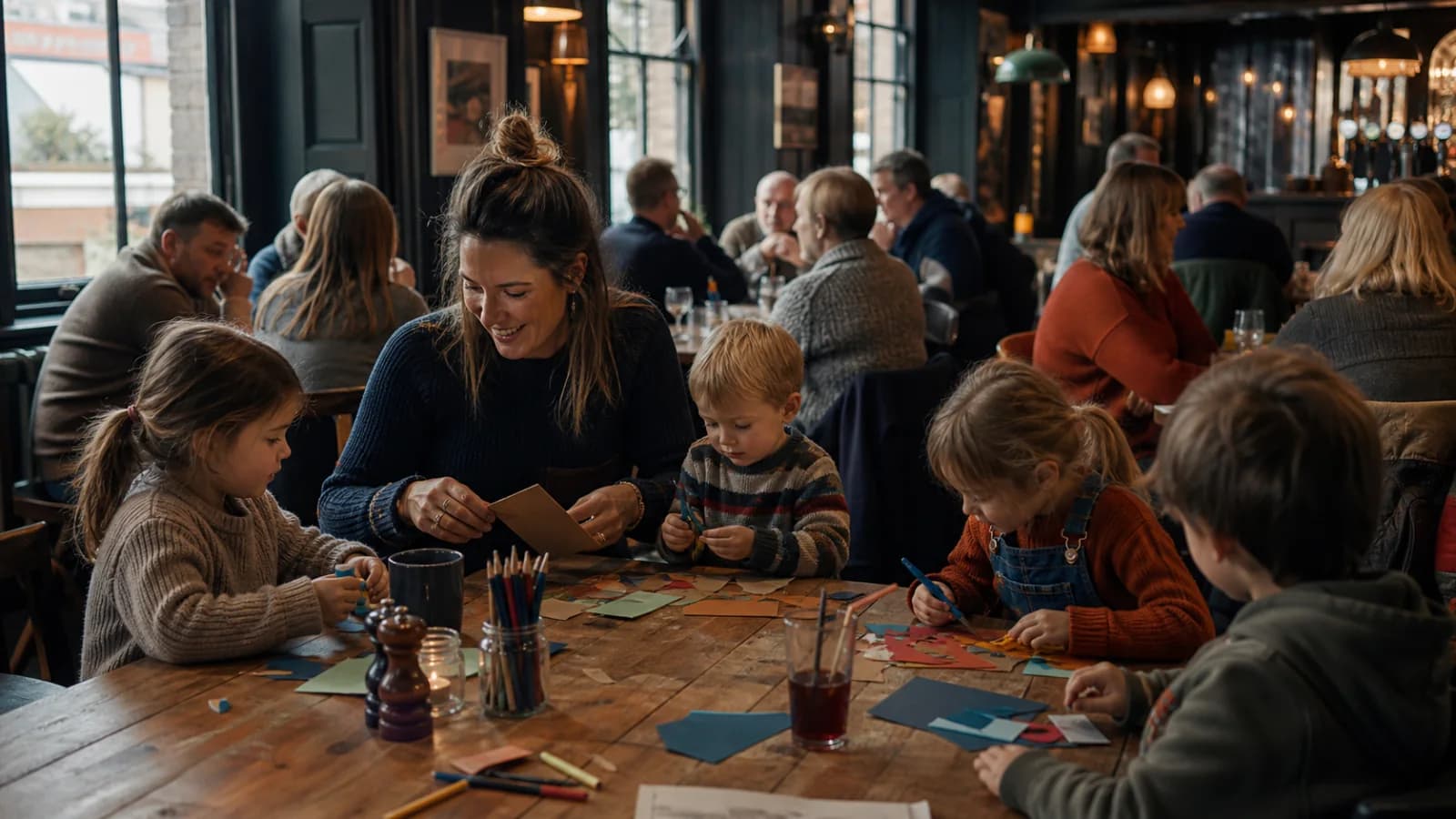
Quick answer
Run a 60 to 75 minute craft session for ages three to eleven, with a grown-up staying at every table. Book it before the roast rush at 10 to 11am, charge £3 to £5 per child including materials, take pre-payment, and bundle craft with a kids roast. Brief staff on safeguarding, consent and allergies first.
If you want Sunday lunch bookings to grow, give parents something extra beyond roast potatoes, because families pick the pub that plans for them. A structured craft hour keeps kids busy, reassures carers about safety, and fills quieter slots (10–11am, midday, or rainy half-term afternoons). Use this guide to plan projects, lay out the room, handle safeguarding and allergies, and promote the session.
Who It’s For and When to Run It
- Age range: aim for 3–11 with a responsible adult per child. Offer a toddler-safe tray (chunky crayons, sticker sheets) so younger siblings aren’t left out.
- Timing: weekend mornings (10–11am) before the roast rush, or weekday afternoons during school holidays. Cap sessions at 60–75 minutes to minimise fatigue.
- Booking model: free with table reservation or £3–£5 per child including materials. Take pre-payments via your booking platform to reduce no-shows.
Project Menu
| Theme | Activity | Mess level | Notes |
|---|---|---|---|
| Valentine’s/Mother’s Day | Card bar with stamps, dried petals, ribbon | Low | Pre-cut hearts, provide glue dots instead of wet glue. |
| Easter | Foam egg decorating, bunny-ear headbands | Medium | Avoid glitter: use metallic stickers instead. |
| Summer Holidays | DIY wind socks, beach-bottle sensory jars | Medium | Offer outdoor drying line. |
| Halloween | Paper lanterns, upcycled costume props | Medium-high | Tablecloths + aprons essential. |
| Christmas | Salt-dough ornaments (pre-baked), felt garlands | Medium | Air-dry overnight; provide boxes for transport. |
Prepare at least two stations per session: one seated craft, one “make and take” quick win. Include an upcycle corner (scrap fabric, cereal boxes) to keep costs down and spark creativity.
Setup and Flow
- Arrival (5 mins): sign-in desk collects guardian contact, allergies, photography preference. Issue wristbands or stickers (green = photo OK, red = no photos).
- Demo (5 mins): facilitator shows finished sample and key steps.
- Make time (40 mins): staff circulate with positive prompts; capture quotes for socials (with consent).
- Show-and-tell (5 mins): quick parade or mini gallery.
- Tidy + transition (5 mins): bins, wipes, labelled bags for take-home crafts.
Room map idea
Entry/sign-in desk → consent icons → hand sanitiser
Station A (cut-and-stick) | Station B (colouring) | Station C (make & take)
Quiet table | Buggy park | First-aid point | Wash-up bin
Materials and Sourcing
- Consumables: child-safe scissors, PVA glue sticks, masking tape, pipe cleaners, foam shapes, stickers, googly eyes, washi tape, non-toxic paint pens.
- Surfaces: wipe-clean cloths, kraft paper roll, clipboards for instructions.
- Suppliers: look for UKCA/CE marks and EN 71 references on craft kits/toys to ensure compliance with the UK Toys (Safety) Regulations. (GOV.UK guidance)
- Allergy control: avoid latex balloons, nut-based materials, fragranced glues. Display ingredient lists for any playdough or edible treats.
Safeguarding and Photography
- Maintain ratios (1 staff per 8 children recommended). All staff should know who the designated safeguarding lead is.
- Keep a clearly signed “grown-ups must stay” policy: this isn’t a drop-off club.
- For photos/videos, follow NSPCC guidance: explain how images will be used, obtain consent, and store footage securely. (NSPCC Learning)
- First aid: have at least one paediatric first-aider on shift, stock plasters/eyewash, and log any incidents immediately.
Accessibility and Inclusion
- Offer adaptive scissors, chunky brushes, and stabilising mats for children with motor challenges.
- Provide visual step-by-step cards with icons and simple text.
- Keep a sensory-friendly corner with noise-reducing headphones, fidgets, and storybooks.
- Ensure tables are spaced for wheelchair access and prams.
Budget and Bundles
| Item | Typical cost |
|---|---|
| Consumables per child | £1.50–£3.50 |
| Reusable kit (aprons, trays) | £30–£80 |
| Staff/facilitator hour | Standard FOH rate |
| Prize draw (optional) | £5–£20 (book voucher, dessert) |
Package craft hour with dining offers: “Craft & Roast” (£14.95 kids roast + craft station + dessert) or “Makers Mocktail” for parents.
Marketing Playbook
- Channels: school/PTA newsletters, local Facebook “Family Fun” groups, WhatsApp parents chats, community noticeboards.
- Messaging: emphasise structured fun, all materials included, allergy-aware, booking essential.
- Copy-ready caption: “Family Craft Hour this Saturday, 10–11am. Ages 3–11 with a grown-up. Material kits included, book your table 👉 [link].”
- Cross-links: mention Family Craft Hour at the end of your boardgame night and quiz articles (“Looking for daytime fun? Try our craft hour.”)
Risk Management and House Rules
- Display simple rules: walking feet, share tools, ask before using scissors, tidy your station.
- Keep spill kits, bin bags, and cloths nearby; brief staff on immediate clean-up to prevent slips.
- Store completed crafts away from hot surfaces and food areas.
Metrics to Track
| KPI | Target |
|---|---|
| Families per session | Healthy turnout |
| Average spend | Healthy per table (craft + food) |
| Dessert add-on | Strong |
| Next-event pre-book | Strong |
Use a QR survey asking what themes families want next (Mother’s Day, World Book Day, etc.) and collect email opt-ins for future marketing.
FAQs
Do I need DBS checks for staff? If the same team members regularly supervise children, DBS checks are strongly advised; at minimum have a named safeguarding lead and documented safer recruitment steps.
How do I manage allergies without scaring parents off? Collect allergy info at sign-in, avoid high-risk materials (nuts, latex), label ingredients on homemade doughs, and keep EPI-pen-aware staff nearby.
How much buffer time should I allow for clean-up? Build in a 15-minute reset after each session for wiping surfaces, restocking trays, and drying crafts before the lunch rush.
Can I monetise take-home kits? Yes: bundle leftover supplies into £5 “mini kits” or offer pre-booked premium packs (e.g., wreath making) for seasonal upsell.
Do I need special insurance or risk assessments? Review your public liability policy, complete an activity-specific risk assessment (tools, slips, choking hazards), and keep it on file with COSHH sheets for any paints/glues.
Need backup?
Tap the sticky “Get in Touch” button on orangejelly.co.uk or email peter@orangejelly.co.uk for help sourcing craft kits, writing risk assessments, or training a craft lead.
keep reading.
- EventsAutumn Pub Event Ideas: The Playbook for Sept–NovThe autumn pub event ideas that actually fill tables: cask, low and no, wine, Halloween, rugby and gifting. The September-to-November moments and how to run them.5 min read
- EventsAutumn Internationals 2026: Fill Your Pub for the RugbyYour operator's guide to filling the pub for the autumn internationals in November 2026. Where to watch rugby, table bookings, match platters and a screen checklist.9 min read
- EventsBlack Friday Ideas for Pubs: Turn It Into BookingsBlack Friday ideas for pubs that build your December instead of cutting prices: turn the weekend into party deposits, pre-orders, gift-card sales and a January bounce-back. A plan to bank bookings and revenue, with no discount war.10 min read
not sure this is your actual problem?
That's the more common situation, and it's what the first conversation is for. An hour, free, going through what's happening in your business before anybody suggests a fix.