
Zero-Waste Stock Management for Pubs in Survival Mode
Use disciplined stock processes to protect every pound of GP when cash is tight and bins are overflowing.
25 September 2025 · 9 min read · Peter Pitcher
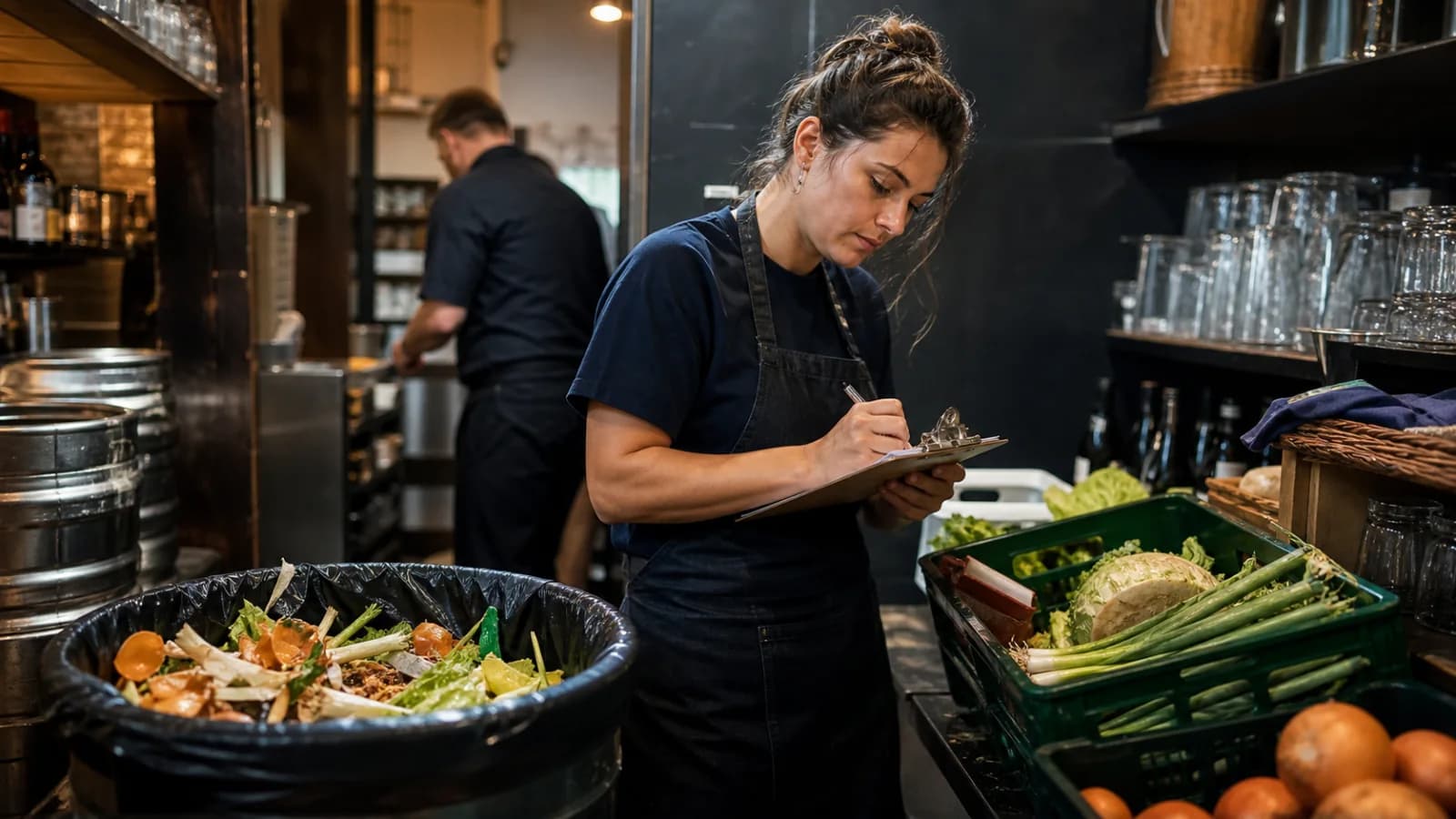
Quick answer
Count weekly rather than monthly, build a menu where each ingredient appears in at least three dishes, and standardise portions with scoops and scales. Enforce visible FIFO labelling, turn surplus into a weekly rescue special, and share waste KPIs with the whole team. Fix habits before you buy any stock system.
Every kilo in the bin is runway you no longer have. When cash is tight, stock control stops being an admin chore and becomes the difference between paying the rent on time and making an awkward phone call.
Almost none of this needs new kit. The money leaking out of a struggling pub leaks through habits: ordering by gut, portioning by eye, and only counting when the bank balance frightens you.
What follows is the rhythm I run at The Anchor, with the arithmetic that shows where the money actually goes.
Step 1: Count more often, not deeper
Weekly counts beat monthly deep dives every time. A month is long enough for a problem to compound and long enough that nobody remembers what caused it.
Do your count on the same day each week, before the first delivery lands:
- Spirits to the nearest tenth of a bottle, using a dipstick or a cheap kitchen scale.
- Kegs and casks as full or part, with the part noted in gallons.
- Only your top 20 food lines by value, not all 300 items in the walk-in.
That last point is the one licensees resist, and it is the one that makes the habit stick. Twenty lines usually carry the bulk of your food spend. Counting twenty takes fifteen minutes rather than three hours, which means it actually happens.
Then compare what your till says you sold against what physically disappeared. The gap is your variance, and variance is the number that matters.
Worked example: say you buy £2,400 of food a week and you are running at 6% waste. That is £144 a week in the bin. Pulling it back to 3% puts roughly £72 a week back in your pocket, close to £3,700 a year, without selling one extra plate.
Step 2: Engineer menus around shared ingredients
A wide menu feels generous. In a quiet pub it is just a slower way to fill the bin, because every extra line needs its own stock holding and its own shelf life.
The test is simple. Write your menu out, list every ingredient, and count how many dishes each one appears in. Any ingredient that appears in only one dish is a liability unless that dish sells hard.
At The Anchor, a slow-cooked beef base earns its place because it works as a pie filling, a loaded fries topping and a Sunday option. One prep session, three sell-through routes, one order line.
Practical moves this week:
- Cut any dish that sells fewer than five portions a week unless it carries an ingredient used elsewhere.
- Replace three single-use garnishes with one house pickle or slaw that works across the board.
- Buy whole and butcher in-house where you have the skill, so the trim goes into stock, ragu or staff food rather than the waste bin.
This sits directly alongside menu engineering that lifts average spend: the same tightening that cuts waste also pushes guests towards your strongest-margin plates. If you want a starting point for what to keep, work through these profitable pub food menu ideas before you cut anything popular.
Step 3: Portion control is culture
If portions vary, your GP is fiction. You cannot cost a dish that leaves the pass at a different weight every time.
Spend under £100 and fix most of it: two digital scales, a set of colour-coded scoops, portion pots for sauces, and a laminated spec sheet with a photo of every plate pinned where the chef stands.
The bar is where this bites hardest, because the numbers are bigger than people expect. A 70cl bottle of spirit yields 28 measures at 25ml. Free-poured at 30ml it yields 23. Five lost measures per bottle, at a £4.20 selling price, is nearly £21 of revenue gone from a single bottle. Do that across ten bottles a week and you have a serious hole.
Weights and Measures law already requires spirits to be sold in specified quantities, so thumb-poured gin is a compliance problem as well as a margin problem. Use thimble measures or optics, and check them.
Apply the same discipline in the cellar with a routine that protects beer quality and yield, then look at your range with a drinks mix that rescues margin.
Step 4: FIFO is not optional
First in, first out only works when it is visible. If a member of staff has to think about it, it will not happen on a busy Saturday.
Make it physical:
- Date-label everything on arrival, not on opening, with day and month in marker on tape.
- Load new stock from the back so the oldest always sits at the front of the shelf.
- Keep one clearly marked "use today" tray at eye level in the walk-in and check it at every shift briefing.
Your food safety management system needs this evidence anyway. Environmental health officers look for date control, stock rotation and temperature records, so the log that protects your margin is the same log that protects your hygiene rating.
The common failure is prep containers with no date. If nobody knows how old the coleslaw is, the safe decision is always to bin it, and you will bin perfectly good product every week.
Step 5: Turn waste into revenue
Surplus is only waste once it has passed its window. Before that, it is inventory looking for a sale.
Build one recurring format so it never looks like panic:
- A Thursday Kitchen Table special at a fixed price, written on the A-board that morning, made from whatever the chef needs to move.
- A staff-choice small plate at the bar, two or three quid, that clears bread, cheese ends and cured meat.
- Late trays in the last hour, sold at cost plus a little, rather than scraped.
Consistency is what turns it from desperation into a reason to come in. Regulars start asking what the special is, which is exactly the behaviour you want.
Do not discount your core menu to clear stock. That teaches guests to wait for a price cut on the dishes you need at full margin.
Step 6: Share waste KPIs publicly
Waste is a team sport, and teams need a scoreboard.
Put a whiteboard in the kitchen and one in the cellar passage. Every week write three numbers: waste value, variance percentage, and last week's figure for comparison. Nothing else.
Run a five-minute review each Monday with the chef and your senior bar member. Ask one question: what caused the biggest single line of waste, and what changes this week? Write the answer on the board.
Two things you must get right. First, never use the board to name individuals, or the log will quietly stop being accurate. Second, tie a small reward to the team result, such as a staff meal or a round after close when variance holds under target for a month. People protect what they get credit for.
Step 7: Train before you buy tech
Stock systems do not reduce waste. People following a process reduce waste, and a system makes that process faster to measure.
Get these four habits running for eight weeks first: weekly counts, dated labels, spec-sheet portions, and a waste log filled in at the point of binning rather than at the end of the night.
Once the habits hold, an EPOS system that tracks stock properly will earn its keep, because it can compare theoretical against actual usage automatically and flag the lines drifting out of spec. Buy it before the habits exist and you will have an expensive subscription producing reports nobody trusts.
The waste you cannot see behind the bar
Draught is where most bars lose money quietly, because none of it looks like waste.
Every line clean pushes the beer sitting in the line down the drain, and BBPA guidance is to clean dispense lines at least every seven days. Say you run eight lines and lose roughly two pints per line per clean. That is sixteen pints a week, over 800 pints a year, before a single bad pour.
That loss is expected, not avoidable, so the job is to measure it and claim it. Ask your supplier what ullage and line-cleaning allowance you can reclaim, and keep the paperwork. As a Greene King tenant I treat those claims as part of the weekly routine rather than an afterthought.
Then check the avoidable losses: over-frothing from warm cellar temperatures, wrong-sized glassware, and gas pressure set by whoever fiddled with it last. A cellar that drifts warm costs you yield on every pull.
What the law now expects of your bins
Waste separation is no longer optional, and the rules differ by nation.
| Where | What changed | Who it covers |
|---|---|---|
| England | Food waste and dry recyclables must be separated from general waste (from 31 March 2025) | Workplaces with 10 or more full-time equivalent staff; smaller workplaces from 31 March 2027 |
| Wales | All workplaces must separate recycling (from 6 April 2024); food waste presented separately at 5kg or more in any seven days; food waste to sewer banned | All workplaces, including pubs, cafes and hotels |
There is a commercial angle here, not just a compliance one. Separated food waste is weighed on collection, which hands you a free weekly measurement of exactly how much you are throwing away. Ask your waste contractor for the tonnage figures and put them on the board.
Common mistakes
- Counting only when money is already tight, so you never see the trend.
- Over-ordering to avoid stockouts, then discounting to clear the surplus.
- Ignoring waste logs after the first week, usually because they live in a folder nobody opens.
- Buying a stock system to fix a training problem.
- Treating line-cleaning losses as invisible instead of claiming them back.
Quick checklist
- Weekly count scheduled on a fixed day, top 20 lines only.
- Cross-use ingredients identified and single-use lines cut.
- Scales, scoops and spec sheets in place, spirits on measures.
- Waste log filled in at the bin, KPIs on a visible board.
- Ullage and line-cleaning allowances claimed every month.
- Food waste separated in line with the rules where you trade.
Mini FAQ
Does zero waste mean no waste? No. It means disciplined reduction. The goal is a consistent downward trend, not perfection.
What is the fastest win? Portion control on spirits and stricter ordering on your top 20 lines. Both show up in the numbers inside a week.
Who should own this? One named person per area: the chef for food, your senior bar member for wet. Shared ownership means nobody owns it.
questions people ask.
How much waste is acceptable in a pub kitchen?
What's the best way to reduce drink waste behind the bar?
Should I reduce my pub menu to cut waste?
How often should a pub do a stock take?
Do pubs legally have to separate food waste?
keep reading.
- OperationsAI for Pubs: What Is New, What Works and Where to StartAI for pubs, from a working licensee: what has changed, the jobs it does well, the shortcuts worth knowing and the house rules that keep you out of trouble.24 min read
- OperationsWet-Led vs Food-Led Pubs: Understanding Your Revenue ModelWhat wet-led and food-led actually mean, the economics of each model, and how to work out which approach is right for your pub.15 min read
- OperationsFood Allergies and GDPR: The Compliance Nightmares That Could Close You DownNavigate the compliance minefield without hiring expensive consultants. Simple systems that keep you legal and let you focus on running your pub.10 min read
not sure this is your actual problem?
That's the more common situation, and it's what the first conversation is for. An hour, free, going through what's happening in your business before anybody suggests a fix.